Quran · · 6 min read
Ayatul Kursi: Arabic Text, Meaning and Virtues (Quran 2:255)
Ayatul Kursi — “the Verse of the Kursi” — is verse 255 of Surah Al-Baqarah. The Prophet ﷺ called it the greatest verse in the Book of Allah, and many Muslims recite it every night before sleep.
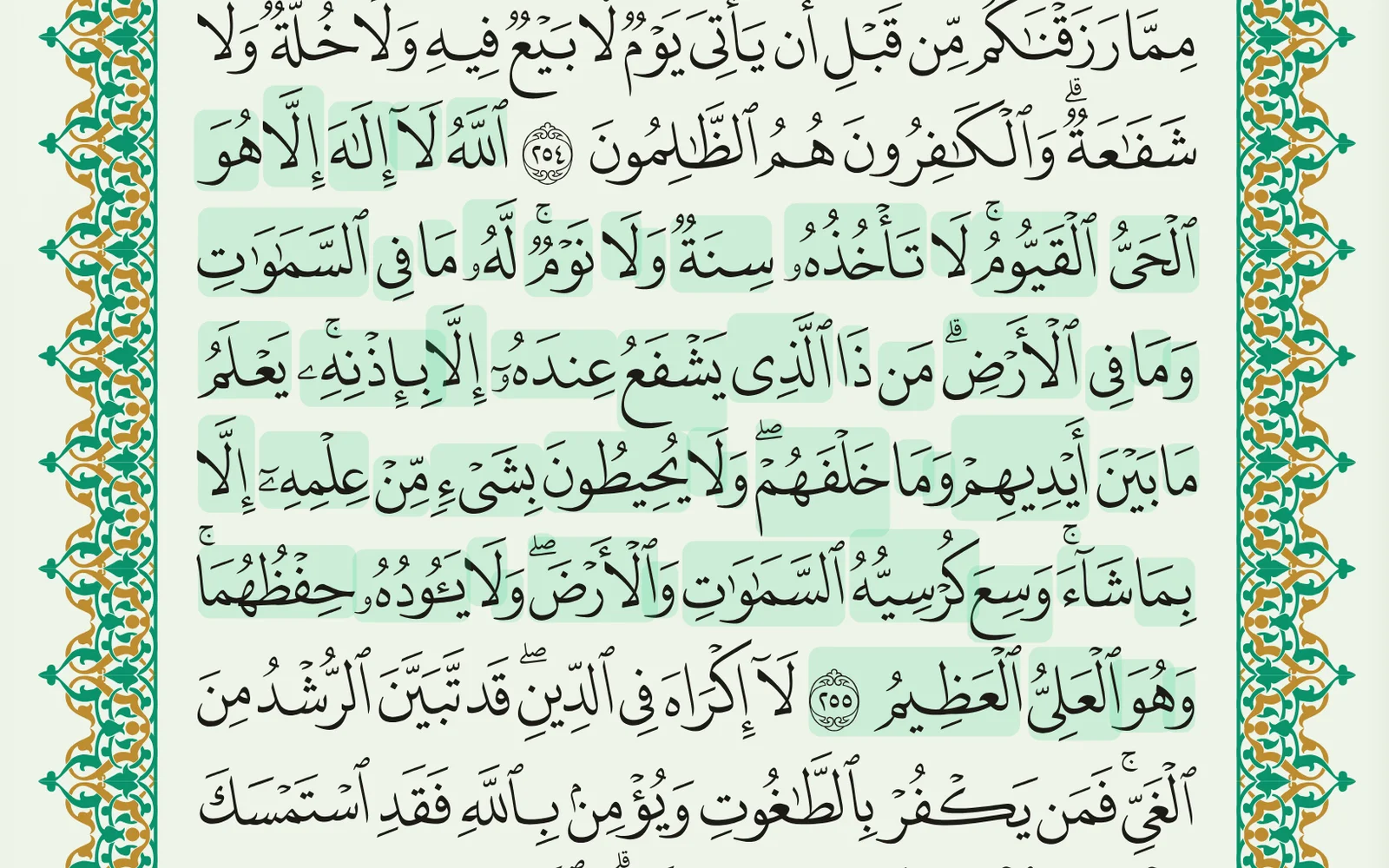
Short answer: Ayatul Kursi is verse 255 of Surah Al-Baqarah (Quran 2:255). It describes Allah’s oneness, life, knowledge and power. The Prophet ﷺ called it the greatest verse of the Quran (Sahih Muslim), and reciting it before sleep brings Allah’s protection until morning (Sahih al-Bukhari 2311).
The text of Ayatul Kursi
Here is the verse in the Arabic of the Madinah mushaf, followed by a translation. You can also open it in the Noor Mushaf to read it on the page and listen to its recitation.
ٱللَّهُ لَآ إِلَٰهَ إِلَّا هُوَ ٱلۡحَيُّ ٱلۡقَيُّومُ ۚ لَا تَأۡخُذُهُۥ سِنَةࣱ وَ لَا نَوۡمࣱ ۚ لَّهُۥ مَا فِي ٱلسَّمَٰوَٰتِ وَ مَا فِي ٱلۡأَرۡضِ ۗ مَن ذَا ٱلَّذِي يَشۡفَعُ عِندَهُۥٓ إِلَّا بِإِذۡنِهِۦ ۚ يَعۡلَمُ مَا بَيۡنَ أَيۡدِيهِمۡ وَ مَا خَلۡفَهُمۡ ۖ وَ لَا يُحِيطُونَ بِشَيۡءࣲ مِّنۡ عِلۡمِهِۦٓ إِلَّا بِمَا شَآءَ ۚ وَسِعَ كُرۡسِيُّهُ ٱلسَّمَٰوَٰتِ وَ ٱلۡأَرۡضَ ۖ وَ لَا يَـُٔودُهُۥ حِفۡظُهُمَا ۚ وَ هُوَ ٱلۡعَلِيُّ ٱلۡعَظِيمُ
Transliteration
Allāhu lā ilāha illā huwal-ḥayyul-qayyūm. Lā ta’khudhuhū sinatuw-wa lā nawm. Lahū mā fis-samāwāti wa mā fil-arḍ. Man dhal-ladhī yashfa‘u ‘indahū illā bi-idhnih. Ya‘lamu mā bayna aydīhim wa mā khalfahum, wa lā yuḥīṭūna bi-shay’im-min ‘ilmihī illā bimā shā’. Wasi‘a kursiyyuhus-samāwāti wal-arḍ, wa lā ya’ūduhū ḥifẓuhumā, wa huwal-‘aliyyul-‘aẓīm.
Transliteration helps you follow along, but it cannot carry every Arabic sound. To learn to read the original, see Noor Muallim.
What the verse is about
Ayatul Kursi is a verse about who Allah is. In a few lines it describes His oneness, His life and self-sufficiency, His ownership of everything in the heavens and the earth, and the completeness of His knowledge:
- “Allah — there is no deity except Him” — the foundation of tawhid, the oneness of Allah.
- “the Ever-Living, the Self-Sustaining” (al-Ḥayy, al-Qayyūm) — He lives without beginning or end, and everything else depends on Him.
- “Neither drowsiness overtakes Him nor sleep” — His care for creation never pauses.
- “Who is it that can intercede with Him except by His permission?” — no one speaks on behalf of another before Allah unless He allows it.
- “He knows what is before them and what will be after them” — His knowledge is complete; ours is only what He wills to give.
- “His Kursī extends over the heavens and the earth” — the verse takes its name from this phrase.
- “and He is the Most High, the Most Great” — the verse closes with two of His names.
Its virtues in authentic hadith
Two narrations in the most authentic hadith collections speak directly about this verse.
Ubayy ibn Ka‘b said: Allah’s Messenger ﷺ said: “O Abu’l-Mundhir, do you know which verse of the Book of Allah is the greatest?” … I said: “Allah, there is no god but He, the Living, the Eternal.” He struck me on my chest and said: “May knowledge be pleasant for you, O Abu’l-Mundhir.”
Abu Hurayrah was told: “Whenever you go to bed, recite Ayat al-Kursi from beginning to end. Allah will appoint a guard for you who will stay with you, and no devil will come near you until morning.” The Prophet ﷺ said: “He told you the truth, although he is a liar.”
In the second narration the advice came from a thief who turned out to be a devil — and the Prophet ﷺ confirmed that this particular advice was true. The same story is also narrated in Bukhari 3275 and Bukhari 5010.
When Muslims recite it
- Before sleep — following the narration of Abu Hurayrah above.
- In the morning and evening remembrance (adhkar) — many Muslims include it in their daily adhkar.
- To learn tawhid — because it summarises the attributes of Allah, it is often among the first verses taught to children.
Frequently asked questions
Which verse is Ayatul Kursi?
Ayatul Kursi is verse 255 of Surah Al-Baqarah, the second chapter of the Quran (2:255).
Why is it called Ayatul Kursi?
It is named after the phrase “His Kursī extends over the heavens and the earth” in the middle of the verse.
What is the virtue of reciting Ayatul Kursi before sleep?
In Sahih al-Bukhari (2311) it is narrated that whoever recites it when going to bed will have a guard from Allah, and no devil will come near him until morning.