Dhikr · · 7 min read
Morning and Evening Adhkar (Azkar): Authentic Duas with Arabic, Transliteration and Meaning
A few minutes at the start of the day and a few at its end. These are the best-known morning and evening adhkar as they are recorded in the books of Sunnah — with the Arabic text, transliteration, meaning and source of each, so you can say them with confidence in their authenticity.
Short answer: Morning adhkar are said after the Fajr prayer, and evening adhkar after ‘Asr and into the night. Among the most authentic are Sayyid al-Istighfar (Sahih al-Bukhari 6306), “Bismillāhil-ladhī lā yaḍurru…” three times (Jami‘ at-Tirmidhi 3388), Al-Ikhlas, Al-Falaq and An-Nas three times each (Sunan Abi Dawud 5082), and “SubḥānAllāhi wa biḥamdih” a hundred times (Sahih Muslim).
When are the morning and evening adhkar said?
The time for the morning adhkar begins at dawn (Fajr), and the best time is after the Fajr prayer until sunrise. The time for the evening adhkar is after the ‘Asr prayer until sunset, and many scholars extend it into the first part of the night. If you miss them in their time, say them whenever you remember — remembering Allah is good in every case.
You can find the prayer times for your city on the prayer times page, and a tasbih counter in Noor.
Sayyid al-Istighfar — the best way to seek forgiveness
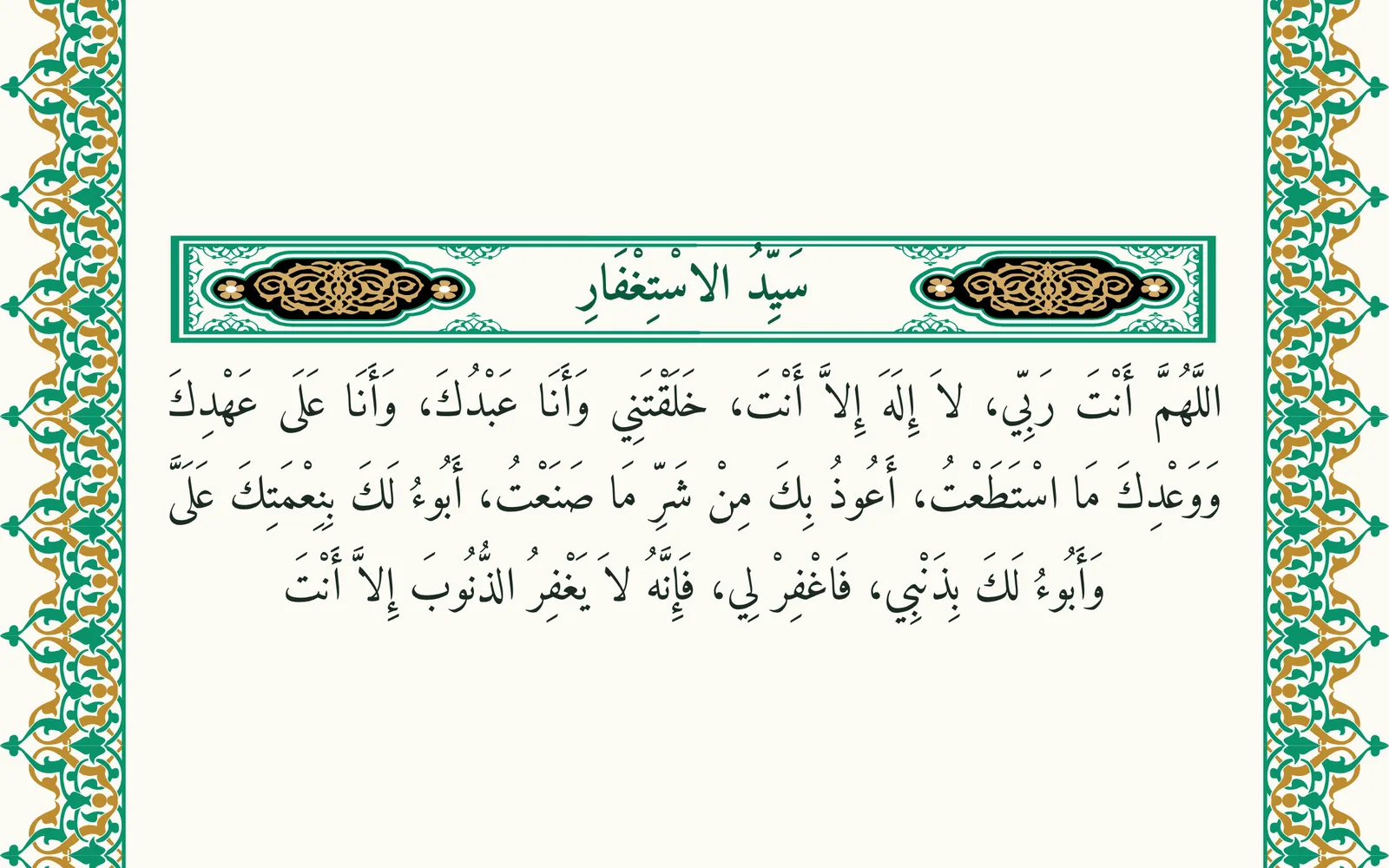
The Prophet ﷺ called it “the master of seeking forgiveness” (Sayyid al-Istighfār), and said that whoever says it with firm faith in it, in the morning or the evening, and dies that day or that night, will be among the people of Paradise.
اللَّهُمَّ أَنْتَ رَبِّي، لاَ إِلَهَ إِلاَّ أَنْتَ، خَلَقْتَنِي وَأَنَا عَبْدُكَ، وَأَنَا عَلَى عَهْدِكَ وَوَعْدِكَ مَا اسْتَطَعْتُ، أَعُوذُ بِكَ مِنْ شَرِّ مَا صَنَعْتُ، أَبُوءُ لَكَ بِنِعْمَتِكَ عَلَىَّ وَأَبُوءُ لَكَ بِذَنْبِي، فَاغْفِرْ لِي، فَإِنَّهُ لاَ يَغْفِرُ الذُّنُوبَ إِلاَّ أَنْتَ
Allāhumma anta rabbī, lā ilāha illā ant, khalaqtanī wa ana ‘abduk, wa ana ‘alā ‘ahdika wa wa‘dika mastaṭa‘t, a‘ūdhu bika min sharri mā ṣana‘t, abū’u laka bi-ni‘matika ‘alayya wa abū’u laka bi-dhanbī, faghfir lī, fa-innahū lā yaghfirudh-dhunūba illā ant.
Bismillahil-ladhi la yadurru — three times
بِسْمِ اللَّهِ الَّذِي لاَ يَضُرُّ مَعَ اسْمِهِ شَيْءٌ فِي الأَرْضِ وَلاَ فِي السَّمَاءِ وَهُوَ السَّمِيعُ الْعَلِيمُ
Bismillāhil-ladhī lā yaḍurru ma‘asmihī shay’un fil-arḍi wa lā fis-samā’, wa huwas-samī‘ul-‘alīm.
Al-Ikhlas, Al-Falaq and An-Nas — three times
Surah Al-Ikhlas, Al-Falaq and An-Nas, each three times in the morning and three times in the evening:
‘Abdullah ibn Khubayb reported that the Messenger of Allah ﷺ said to him: “(Recite) Qul huwa Allāhu aḥad and the two Mu‘awwidhatayn (Al-Falaq and An-Nas) in the evening and in the morning three times; they will suffice you against everything.”
Allahumma bika asbahna
اللَّهُمَّ بِكَ أَصْبَحْنَا وَبِكَ أَمْسَيْنَا وَبِكَ نَحْيَا وَبِكَ نَمُوتُ وَإِلَيْكَ الْمَصِيرُ
Allāhumma bika aṣbaḥnā, wa bika amsaynā, wa bika naḥyā, wa bika namūtu, wa ilaykal-maṣīr.
Amsayna wa amsal-mulku lillah
The Prophet ﷺ used to say this in the evening, and in the morning he would say: “Aṣbaḥnā wa aṣbaḥal-mulku lillāh” (“We have entered the morning and the dominion belongs to Allah”).
أَمْسَيْنَا وَأَمْسَى الْمُلْكُ لِلَّهِ وَالْحَمْدُ لِلَّهِ لاَ إِلَهَ إِلاَّ اللَّهُ وَحْدَهُ لاَ شَرِيكَ لَهُ اللَّهُمَّ إِنِّي أَسْأَلُكَ مِنْ خَيْرِ هَذِهِ اللَّيْلَةِ وَخَيْرِ مَا فِيهَا وَأَعُوذُ بِكَ مِنْ شَرِّهَا وَشَرِّ مَا فِيهَا اللَّهُمَّ إِنِّي أَعُوذُ بِكَ مِنَ الْكَسَلِ وَالْهَرَمِ وَسُوءِ الْكِبَرِ وَفِتْنَةِ الدُّنْيَا وَعَذَابِ الْقَبْرِ
Amsaynā wa amsal-mulku lillāh, wal-ḥamdu lillāh, lā ilāha illallāhu waḥdahū lā sharīka lah. Allāhumma innī as’aluka min khayri hādhihil-laylati wa khayri mā fīhā, wa a‘ūdhu bika min sharrihā wa sharri mā fīhā. Allāhumma innī a‘ūdhu bika minal-kasali wal-harami wa sū’il-kibari wa fitnatid-dunyā wa ‘adhābil-qabr.
The morning wording “Aṣbaḥnā wa aṣbaḥal-mulku lillāh” is in another narration in Muslim: Sahih Muslim.
SubhanAllahi wa bihamdih — a hundred times
Abu Hurayrah reported that the Messenger of Allah ﷺ said: “Whoever says, in the morning and in the evening, SubḥānAllāhi wa biḥamdih (Glory be to Allah and praise be to Him) a hundred times, no one will come on the Day of Resurrection with anything better than what he brings, except someone who said the same as he said or more.”
Ayat al-Kursi and the last verses of Al-Baqarah
Many Muslims are also keen to recite Ayat al-Kursi among their morning and evening adhkar and before sleep. As for the last two verses of Surah Al-Baqarah, they are recited at night:
Abu Mas‘ud, may Allah be pleased with him, reported that the Prophet ﷺ said: “Whoever recites the two verses at the end of Surah Al-Baqarah at night, they will suffice him.”
ءَامَنَ ٱلرَّسُولُ بِمَآ أُنزِلَ إِلَيۡهِ مِن رَّبِّهِۦ وَ ٱلۡمُؤۡمِنُونَ ۚ كُلٌّ ءَامَنَ بِٱللَّهِ وَ مَلَٰٓئِكَتِهِۦ وَ كُتُبِهِۦ وَ رُسُلِهِۦ لَا نُفَرِّقُ بَيۡنَ أَحَدࣲ مِّن رُّسُلِهِۦ ۚ وَ قَالُواْ سَمِعۡنَا وَ أَطَعۡنَا ۖ غُفۡرَانَكَ رَبَّنَا وَ إِلَيۡكَ ٱلۡمَصِيرُ
لَا يُكَلِّفُ ٱللَّهُ نَفۡسًا إِلَّا وُسۡعَهَا ۚ لَهَا مَا كَسَبَتۡ وَ عَلَيۡهَا مَا ٱكۡتَسَبَتۡ ۗ رَبَّنَا لَا تُؤَاخِذۡنَآ إِن نَّسِينَآ أَوۡ أَخۡطَأۡنَا ۚ رَبَّنَا وَ لَا تَحۡمِلۡ عَلَيۡنَآ إِصۡرࣰا كَمَا حَمَلۡتَهُۥ عَلَى ٱلَّذِينَ مِن قَبۡلِنَا ۚ رَبَّنَا وَ لَا تُحَمِّلۡنَا مَا لَا طَاقَةَ لَنَا بِهِۦ ۖ وَ ٱعۡفُ عَنَّا وَ ٱغۡفِرۡ لَنَا وَ ٱرۡحَمۡنَآ ۚ أَنتَ مَوۡلَىٰنَا فَٱنصُرۡنَا عَلَى ٱلۡقَوۡمِ ٱلۡكَٰفِرِينَ
This is a selection of the best-known and most authentic morning and evening adhkar, not everything that has been narrated on the subject. What you keep up regularly is enough — the deeds most beloved to Allah are the most consistent, even if they are few.
Frequently asked questions
When is the time for the morning and evening adhkar?
The morning adhkar begin at dawn, and the best time is after the Fajr prayer until sunrise. The evening adhkar are after the ‘Asr prayer until sunset, and many scholars extend their time into the first part of the night.
What is Sayyid al-Istighfar?
“Allāhumma anta rabbī, lā ilāha illā ant, khalaqtanī wa ana ‘abduk…” (“O Allah, You are my Lord; there is no god but You. You created me and I am Your servant…”) — narrated by al-Bukhari (6306). Whoever says it with firm faith during the day or the night and dies before the evening or the morning is among the people of Paradise.
How many times should the three Quls be recited in the morning and evening?
Three times: Surah Al-Ikhlas, Al-Falaq and An-Nas, in the morning and in the evening. The hadith says: “they will suffice you against everything” (Sunan Abi Dawud 5082).